NAD+
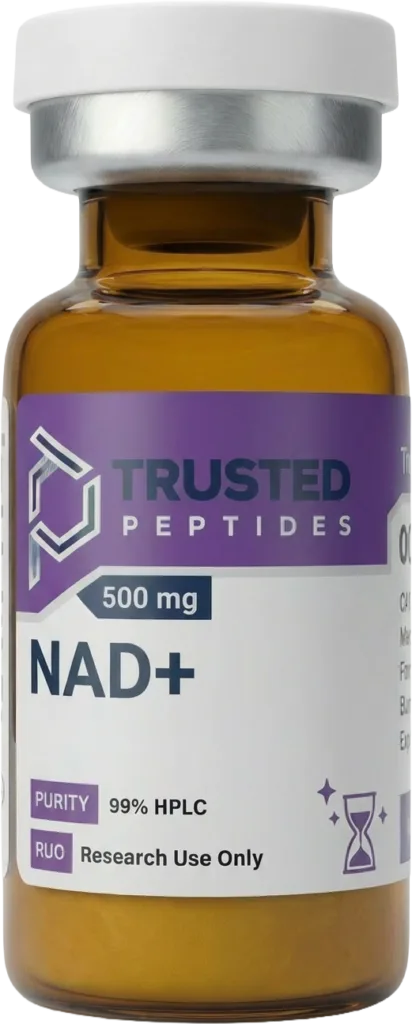
Nicotinamide Adenine Dinucleotide (NAD+) is a vital coenzyme found in every cell, essential for energy metabolism and DNA repair. Research into NAD+ focuses on its potential to boost mitochondrial function, activate sirtuins, and combat age-related cellular decline.
Out of stock
Want to be notified when this product is back in stock?
What is NAD+?
Overview
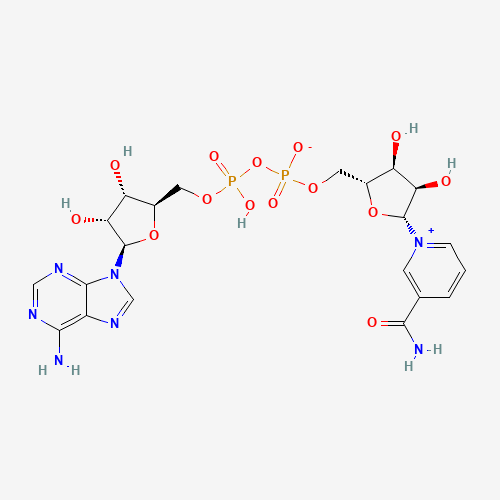
NAD⁺ (nicotinamide adenine dinucleotide) is a ubiquitous cellular coenzyme found across living systems. In biochemical research, it is best known for its role as an electron carrier that cycles between the oxidized (NAD⁺) and reduced (NADH) forms in metabolic reactions.
Beyond classical redox biochemistry, NAD⁺ is also a required cosubstrate for multiple enzyme families, including sirtuins and poly(ADP-ribose) polymerases (PARPs), which are widely studied in the context of cellular stress responses and genome maintenance pathways (model-dependent).
Biochemical characteristics
- Name: Nicotinamide adenine dinucleotide (oxidized form, NAD⁺)
- CAS: 53-84-9
- Molecular formula (commonly listed): C21H27N7O14P2
- Molecular weight (commonly listed, anhydrous basis): 663.43 g/mol
- PubChem: CID 925
Note: reported mass/formula can vary between hydrate/salt listings. For exact lot-specific values, use your COA.
Research applications
In laboratory settings, NAD⁺ is commonly used as a reagent or reference standard in:
- Redox biochemistry (e.g., dehydrogenase-linked assays and NAD⁺/NADH ratio experiments)
- Mitochondrial metabolism and bioenergetic profiling workflows
- NAD⁺-consuming enzyme assays (e.g., sirtuin and PARP activity measurements)
- Metabolomics and pathway mapping studies where NAD⁺ pool size and related metabolites are quantified
- Stress-response model systems that track NAD⁺ availability as a measurable variable (model-dependent)
Pathway and mechanistic context (research framing)
Published reviews frequently discuss NAD⁺ as a central node connecting: energy metabolism, mitochondrial function, and NAD⁺-dependent signaling enzymes (including sirtuins and PARPs). In research, these relationships are typically evaluated through measured endpoints such as enzyme activity, metabolite levels, and gene/protein expression changes—rather than assumed functional outcomes.
Intracellular vs extracellular NAD⁺ (important nuance)
Most NAD⁺ biology is studied inside cells. However, extracellular NAD⁺ and related nucleotides can also be measured in certain experimental systems. In that context, extracellular NAD⁺ is often discussed in relation to ecto-enzymatic metabolism (for example, via CD38) and downstream signaling readouts that depend on the specific model design.
Form & analytical documentation
- Presentation: supplied by Trusted Peptides as a lyophilized (powder) form for stability.
- Typical QC approach: labs commonly confirm identity/purity using standard analytical techniques (e.g., chromatography and mass-based identity confirmation) per internal requirements.
- Best practice: use the batch COA for purity, exact form, and analytical conditions.
Storage and handling (general lab guidance)
- Keep material dry and minimize air/moisture exposure (NAD⁺ can be hygroscopic in some forms).
- Store sealed and protected from light; long-term storage is commonly at cold temperatures (follow your lab SOP and COA guidance).
- If preparing solutions, use sterile technique as needed, aliquot when appropriate, and avoid repeated freeze–thaw cycles.
RUO disclaimer
For Research Use Only (RUO). Not for human or veterinary use. Not for diagnostic or therapeutic purposes.
Products from Trusted Peptides are intended exclusively for qualified laboratory research.
Selected references
- PubChem (identity / formula / CAS): NAD⁺ (CID 925)
- Cantó C, Menzies KJ, Auwerx J. NAD⁺ metabolism and the control of energy homeostasis. Cell Metabolism (2015). PDF
- Verdin E. NAD⁺ in aging, metabolism, and neurodegeneration. Science (2015). PubMed
- Garten A, Schuster S, Penke M, et al. Physiological and pathophysiological roles of NAMPT and NAD metabolism. Nat Rev Endocrinol (2015). PubMed
- Anderson KA, Green MF, Huynh FK, et al. Metabolic control by sirtuins and other enzymes that sense NAD⁺, NADH, or NAD⁺/NADH. Mol Cell (2017). Full text (PMC)
- Hogan KA, Chini CCS, Chini EN. The multi-faceted ecto-enzyme CD38 (extracellular NAD⁺ metabolism context). Front Immunol (2019). Full text (PMC)
- Sigma-Aldrich product listing (CAS / MW anhydrous basis example): CAS 53-84-9
Molecular Structure

53-84-9
C21H27N7O14P2
663.43 g/mol
White to off-white lyophilized powder
Laboratory Tests & Certificates
01082028
Prod. February 9, 2026
Exp. August 24, 2028