Overview
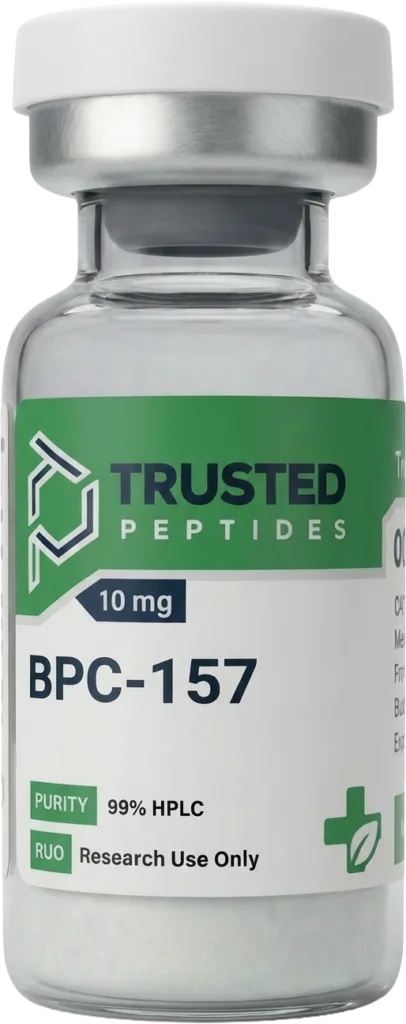
BPC-157 (Body Protection Compound-157) is a synthetic pentadecapeptide (15 amino acids) that has been widely investigated in preclinical research models. In published studies, BPC-157 is commonly used as a laboratory tool to explore pathways involved in cell migration, vascular organization, tissue integrity, and related stress-response signaling in controlled experimental systems.
This product is supplied for research purposes only. The information below summarizes non-clinical findings and does not imply medical or therapeutic use.
Biochemical characteristics
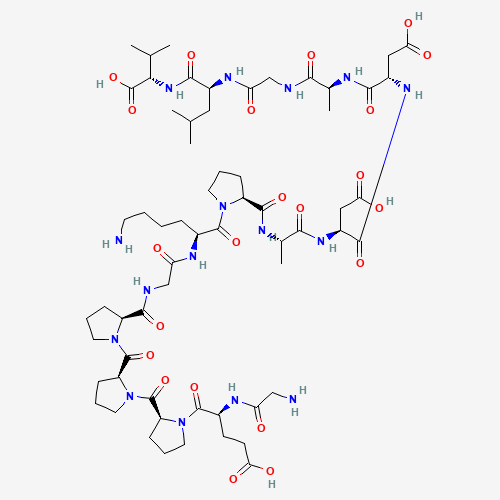
- Sequence: Gly–Glu–Pro–Pro–Pro–Gly–Lys–Pro–Ala–Asp–Asp–Ala–Gly–Leu–Val
- Sequence (1-letter): GEPPPGKPADDAGLV
- Molecular formula: C62H98N16O22
- Molecular weight: 1419.556 g/mol
- Registry reference: PubChem entries list this composition/sequence for BPC-157
BPC-157 is a linear peptide (no disulfide bonds). In the scientific literature it is frequently described as a “stable gastric pentadecapeptide,” and its proline-rich composition is often discussed as one factor that may contribute to stability under certain experimental conditions.
Research applications
BPC-157 is supplied exclusively for laboratory research use and has been employed in controlled experimental studies examining:
- Fibroblast proliferation and directional migration
- Endothelial cell growth and angiogenic pattern formation
- Extracellular matrix (ECM) deposition and remodeling
- Cytoskeletal organization and focal-adhesion signaling
- Oxidative-stress marker modulation in animal models (model-dependent)
- Nitric oxide (NO)–associated biochemical pathways (model-dependent)
All applications are limited to non-clinical research systems designed to study fundamental biological mechanisms.
Pathway and mechanistic context (research framing)
Mechanistic studies in experimental models have evaluated BPC-157 in relation to signaling involved in cell motility and vascular responses. For example, some in-vitro and in-vivo work reports associations with VEGFR2-related signaling and downstream NO-linked pathways in specific assay contexts.
Additional in-vitro work has reported changes in phosphorylation status of focal-adhesion proteins (such as FAK and paxillin) in certain migration-focused models. These readouts are commonly used to study cytoskeletal anchoring and directed cell movement.
Preclinical research summary
Published preclinical literature documents investigations of BPC-157 across multiple experimental models. In rodent systems, it has been studied in research examining:
- Vascular recruitment and perfusion-related outcomes in ischemia/injury paradigms
- Gastrointestinal tissue integrity and mucosal/epithelial injury models
- Connective-tissue remodeling readouts (tendon/ligament/muscle-related models, depending on study design)
Additional studies in other organisms have explored peptide stability and tissue-level stress responses, contributing to broader mapping of conserved signaling behaviors.
Form and analytical testing
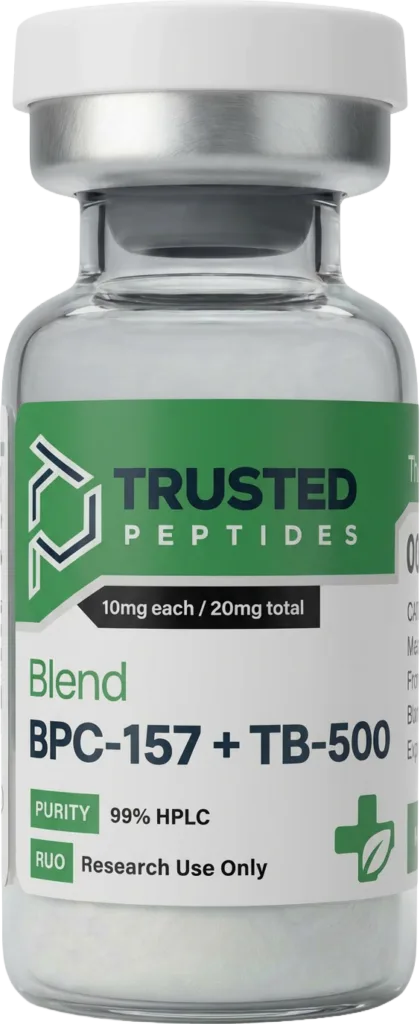
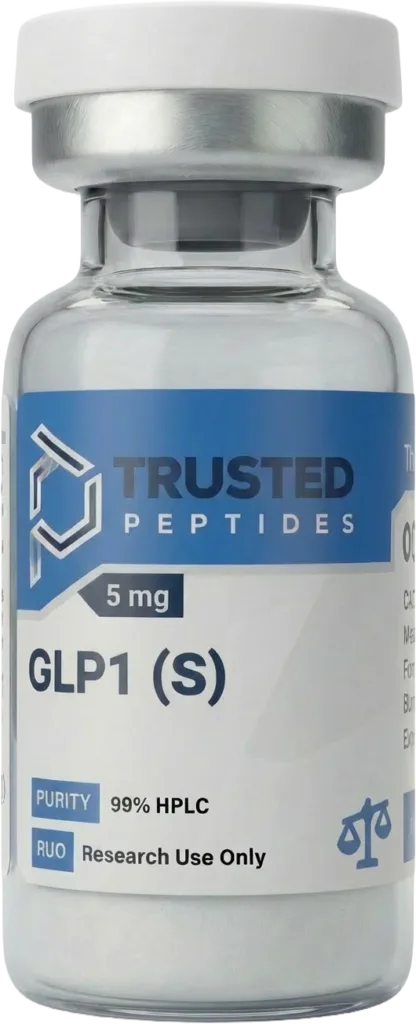
Trusted Peptides supplies BPC-157 as a lyophilized (freeze-dried) powder intended for laboratory workflows. For research reproducibility, peptide identity and purity are commonly verified using:
- HPLC (high-performance liquid chromatography)
- MS (mass spectrometry)
Batch documentation (e.g., COA, and where available HPLC/MS summaries) should be used for traceability and method consistency.
Storage and handling (general lab guidance)
- Moisture control: allow a cold vial to reach room temperature before opening to reduce condensation.
- Protect from light and humidity: keep vials tightly sealed when not in use.
- Long-term storage: lyophilized peptides are commonly stored frozen (often ≤ −20 °C; colder temperatures are frequently used for extended storage).
- After reconstitution: solutions are generally less stable than the dry form—aliquot when appropriate and minimize freeze–thaw cycles.
Research-use-only disclaimer
For Research Use Only (RUO). Products offered by Trusted Peptides are intended exclusively for in-vitro laboratory research and related experimental use. These materials are not medicines or drugs and are not approved to diagnose, treat, cure, or prevent any disease.
Not for human or veterinary use. Not for diagnostic or therapeutic purposes.
Selected references
- Huang T. et al. (2015). Alkali-burn wound model and in-vitro proliferation/migration/angiogenesis readouts. Full text (PMC)
- Hsieh M.-J. et al. (2017). VEGFR2-Akt-eNOS signaling and pro-angiogenic readouts in experimental systems. PubMed
- Sikiric P. et al. (2018). Review context on “stable gastric pentadecapeptide” and preclinical research themes. PubMed
- Sikiric P. et al. (2006). Review discussing stability and NO-system–related research contexts. PubMed