The problem: “promising” doesn’t always mean “actionable”
Peptides often look exciting early because they can show strong effects in simplified systems. But translation is hard: what happens in a dish is not automatically what happens in a whole organism.
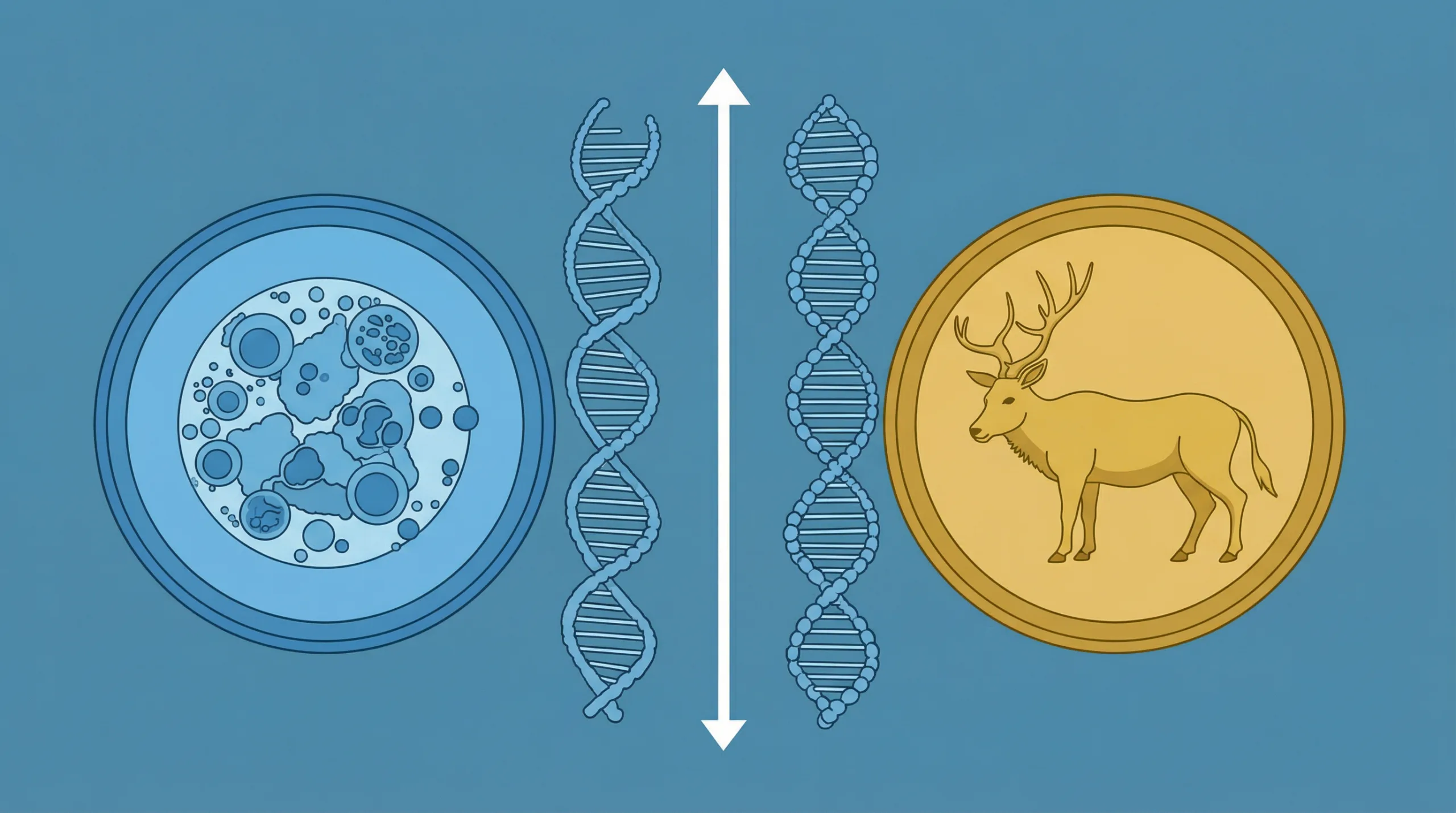
Knowing the differences between in vitro and in vivo evidence helps you:
- interpret claims correctly
- choose appropriate models
- avoid overconfident conclusions
- design more reproducible experiments
Definitions that matter (and why language gets sloppy)
- In vitro: work performed outside a living organism (e.g., purified targets, cell assays).
- In vivo: work performed in whole living organisms.
In vitro can be faster, cheaper, and more controllable—but it’s also easier to create results that don’t generalize.
What in vitro is great for
Use in vitro to answer questions like:
- Does the peptide bind the target?
- Does it change a signaling pathway in a controlled cellular context?
- What’s the rough potency window in a defined system?
- Are there obvious cytotoxicity signals under assay conditions?
It’s a mechanism and screening engine.
Where in vitro commonly misleads
Typical traps include:
- Unrealistic concentrations (orders of magnitude beyond physiologic relevance)
- Cell line artifacts (mutations, drift, contamination, overexpression systems)
- Missing metabolism (enzymatic breakdown is not represented)
- No tissue context (barriers, transport, organ cross-talk absent)
Modern complex in vitro models (3D cultures, organoids) help—but still aren’t the same as in vivo biology.
What in vivo adds (and why it’s harder)
In vivo studies incorporate:
- distribution and clearance
- enzymatic degradation
- tissue barriers
- systemic feedback loops
That’s why in vivo often contradicts in vitro: it’s testing a different level of reality.
A “reader’s checklist” for peptide research claims
Before you trust a conclusion, scan for:
- Model type (in vitro? ex vivo? in vivo?)
- Controls (vehicle, scrambled peptide, known positive)
- Concentration rationale (why that range?)
- Endpoints (proxy markers vs functional outcomes)
- Reproducibility (replicates, independent repeats, statistics)
This checklist is especially useful when you’re evaluating peptides that are popular online.