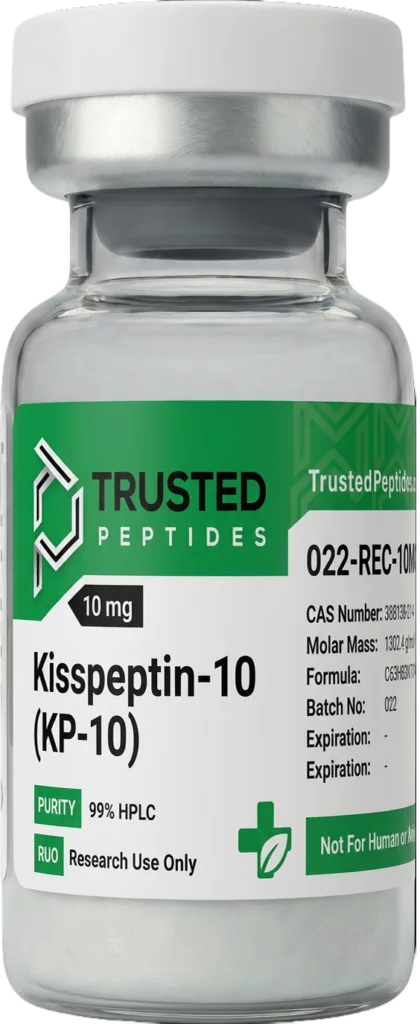
CAS #:
2381089-83-2
2381089-83-2
Molar Mass:
4731.33 g/mol
4731.33 g/mol
Formula:
C223H343F3N46O70
C223H343F3N46O70

From $90.00
This product has multiple variants. The options may be chosen on the product page
Not For Human or Animal Use
From $40.00
MOTS-c is a mitochondrial-derived 16-amino-acid peptide encoded within mitochondrial DNA, used in laboratory research to study metabolic stress responses, AMPK-associated signaling, mitochondrial-to-nuclear communication, adaptive gene expression, skeletal muscle metabolism, and model-dependent pathways related to cellular energy homeostasis and stress resilience.
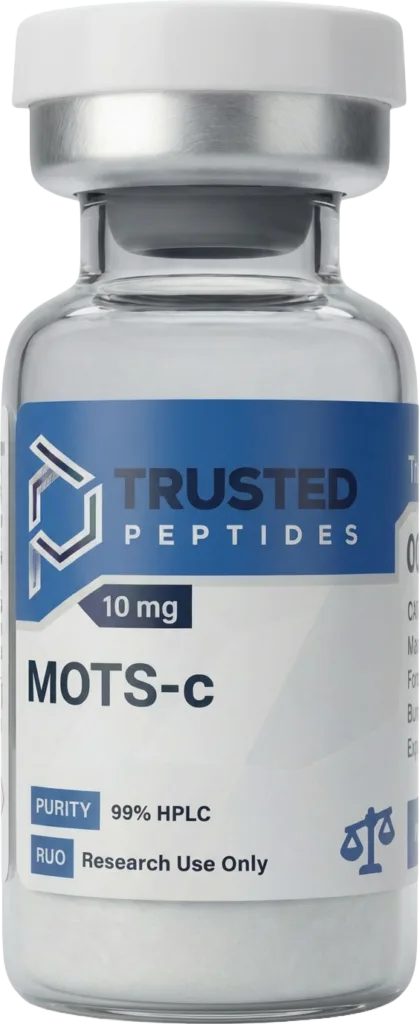
MOTS-c is a research peptide used in laboratory studies focused on metabolic stress signaling, AMPK-associated pathways, mitochondrial-to-nuclear communication, adaptive gene-expression responses, and model-dependent regulation of cellular energy homeostasis. Its mitochondrial origin and defined sequence make it a useful tool for controlled experimental work involving stress adaptation, metabolic signaling, and mito-nuclear biology.
For Research Use Only (RUO). Not for human or veterinary use.
MOTS-c — a 16-amino-acid mitochondrial-derived peptide encoded within mitochondrial DNA. In research settings, it is commonly used to investigate metabolic homeostasis, AMPK-associated signaling, cellular adaptation to metabolic stress, mitochondrial retrograde signaling, and adaptive regulation of nuclear gene expression in model-dependent systems.
MOTS-c is widely studied because it represents a mitochondrial-encoded signaling peptide with reported roles in metabolic regulation and stress adaptation. Experimental literature has associated MOTS-c with folate-purine and AMPK-linked metabolic signaling, while other studies have examined its ability to translocate to the nucleus under metabolic stress and influence adaptive nuclear gene-expression programs.
Because of this, MOTS-c is commonly used in controlled studies to examine:
Mitochondrial-derived signaling: MOTS-c is studied as a peptide encoded within the mitochondrial genome, supporting investigation of mito-nuclear communication and cross-compartment signaling biology.
Metabolic regulation: In experimental systems, MOTS-c has been associated with pathways involved in metabolic homeostasis, nutrient-stress responses, and AMPK-linked signaling networks.
Nuclear translocation: Research has examined stress-dependent movement of MOTS-c to the nucleus, where it has been reported to participate in adaptive regulation of nuclear gene expression.
Muscle and exercise biology: Some studies have explored MOTS-c in skeletal muscle and exercise-related models, including model-dependent effects on metabolic adaptation and cellular fitness.
These points summarize research directions reported in the literature and do not imply clinical efficacy or approved therapeutic use.
MOTS-c may be relevant in experimental workflows such as:
MOTS-c is commonly supplied as a lyophilized (freeze-dried) powder to support storage stability and laboratory handling. Identity and composition are typically verified using standard analytical techniques such as:
Where available, batch-specific COA, HPLC, and MS documentation should be retained as part of laboratory records.
For Research Use Only (RUO). Materials in this category are intended exclusively for in-vitro laboratory research and related experimental use. These materials are not medicines or drugs and are not approved to diagnose, treat, cure, or prevent any disease.
Not for human or veterinary use.