
CAS #:
446262-90-4 + 170851-70-4
446262-90-4 + 170851-70-4
Molar Mass:
3367.95 + 711.87 g/mol
3367.95 + 711.87 g/mol
Formula:
C152H252N44O42 + C38H49N9O5
C152H252N44O42 + C38H49N9O5
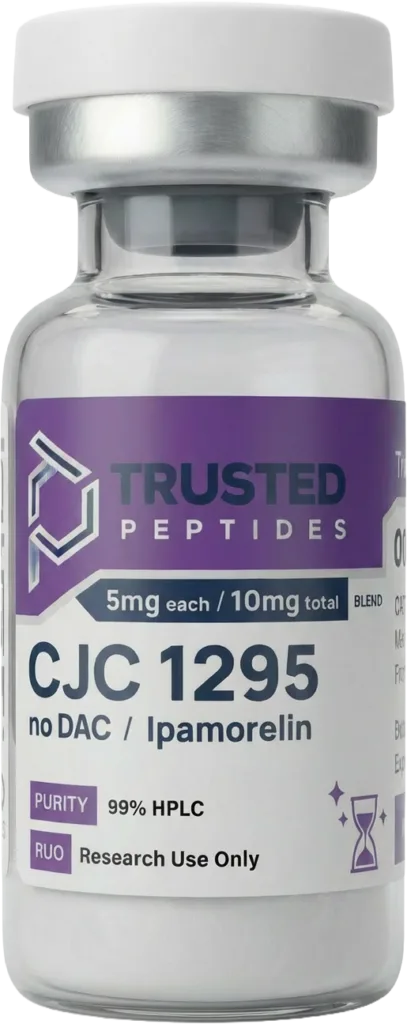
Not For Human or Animal Use
$140.00
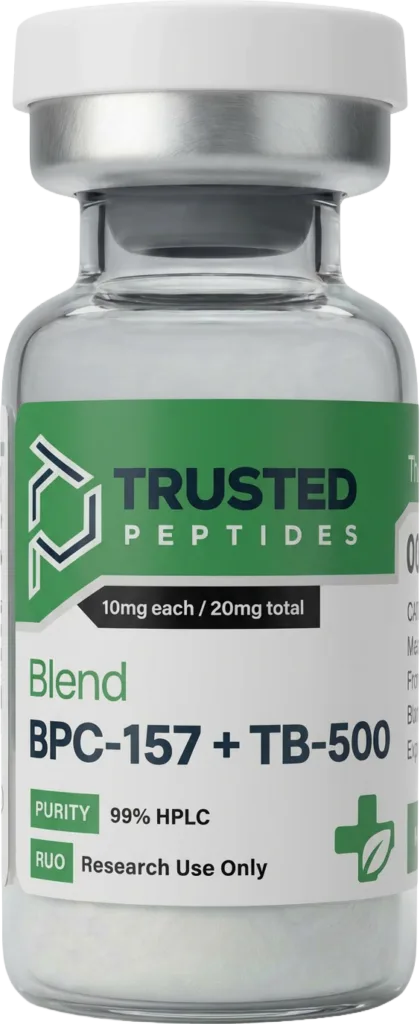
Research peptide combination comprising BPC-157, TB-500, KPV, and GHK-Cu, assembled for laboratory investigation of processes related to tissue response, angiogenesis, inflammation signaling, epithelial integrity, and copper-peptide mediated cellular activity, with relevance to experimental models of repair, recovery, and regenerative biology.
In stock
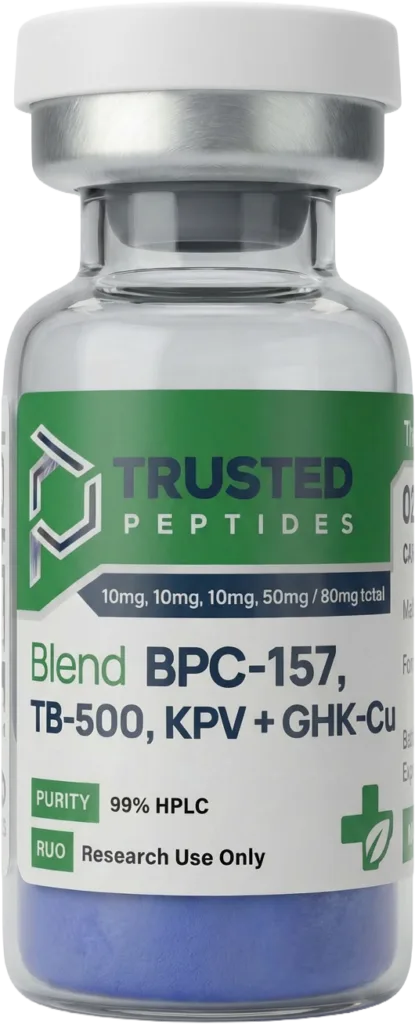
BPC-157, TB-500, KPV + GHK-Cu is a multi-peptide research formulation designed for laboratory studies focused on tissue-response signaling, cytoskeletal organization, inflammatory pathways, epithelial barrier biology, angiogenesis-related processes, and extracellular matrix (ECM) remodeling. The purpose of this combination is to support investigation of multi-pathway interactions in a single, standardized preparation.
For Research Use Only (RUO). Not for human or veterinary use.
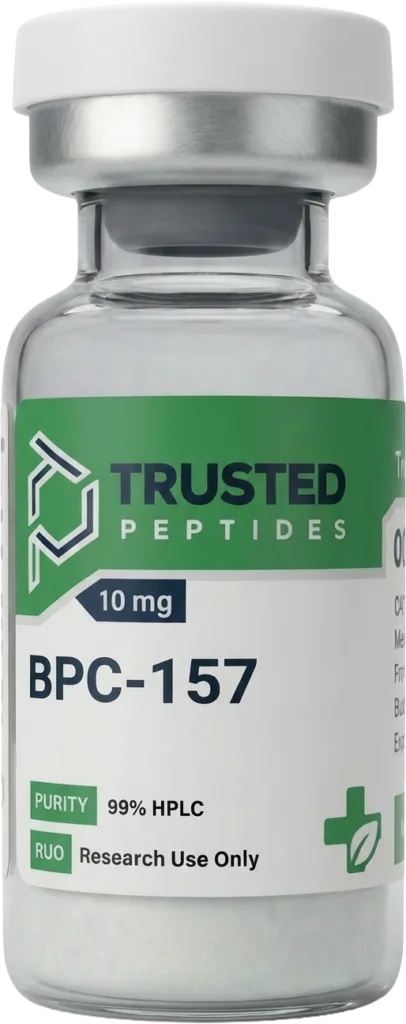
BPC-157 — a synthetic pentadecapeptide (15 amino acids) described in the literature as a “stable gastric pentadecapeptide.” In preclinical research, it is studied in connection with pathways involving nitric oxide (NO) signaling, vascular responses, inflammatory mediators, and repair-associated cellular signaling.
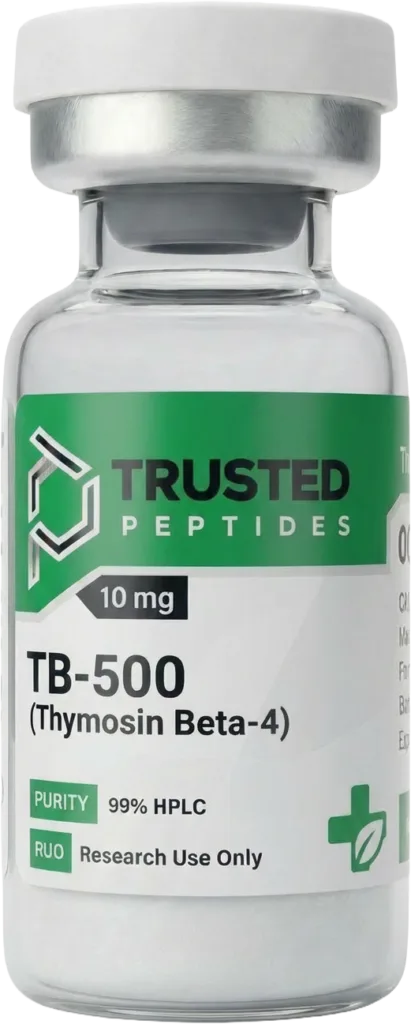
TB-500 — a commonly used marketplace name associated with thymosin β4 biology. Thymosin β4 is widely studied as a major G-actin–binding / actin-sequestering peptide involved in cytoskeletal organization, cell migration, and tissue remodeling. Note: “TB-500” is used inconsistently across suppliers and publications, sometimes referring to fragments rather than the full biological context; sequence-level identification and batch COA should be used for precise verification.
KPV — a short tripeptide motif (Lys–Pro–Val) reported in the literature in connection with α-MSH-derived biology. In research settings, KPV is commonly explored for effects on inflammatory signaling, epithelial barrier integrity, and immune-related cellular responses in model-dependent systems.
GHK-Cu — a copper(II)-complexed tripeptide (Gly–His–Lys) naturally reported in human biological fluids. In laboratory research, it is used to study copper-dependent redox signaling, ECM-related regulation, and remodeling-associated pathways, including matrix metalloproteinase (MMP) and inhibitor balance in selected models.
Although these peptides can overlap in the biological readouts they are studied with, they are associated with different mechanistic emphases. The rationale for combining them is to test whether parallel modulation of:
may produce additive, complementary, or interaction effects in controlled experimental designs. Combination-specific outcomes remain an active area of investigation and can vary substantially depending on model, dosing framework, solvent system, and study conditions.
BPC-157: commonly investigated in preclinical systems for pathways related to NO-associated signaling, vascular responses, and inflammation-linked cellular processes.
Thymosin β4 / TB-500: studied for its actin-binding role and downstream relevance to cell migration, structural organization, and remodeling-related biology.
KPV: frequently explored in relation to inflammatory mediator signaling, epithelial integrity, and immune-response modulation in model-dependent experimental settings.
GHK-Cu: examined for copper-mediated biochemical effects, oxidative-stress signaling, and ECM regulation, including MMP-related and matrix-turnover readouts in selected systems.
These points summarize research directions described in the literature and do not imply clinical efficacy or approved therapeutic use.
This blend may be relevant in experimental workflows such as:
This blend is commonly supplied as a lyophilized (freeze-dried) powder to support handling, shipping stability, and storage. Identity and composition are typically verified using standard analytical techniques such as:
Where available, batch-specific COA, HPLC, and MS documentation should be retained as part of laboratory records.
For Research Use Only (RUO). Products described in this category are intended exclusively for in-vitro laboratory research and related experimental use. These materials are not medicines or drugs and are not approved to diagnose, treat, cure, or prevent any disease.
Not for human or veterinary use.
Any references to published literature, researchers, or peptide-related studies are provided strictly for scientific context. Such references do not imply endorsement of this product by any author, institution, or investigator, and no affiliation should be inferred.
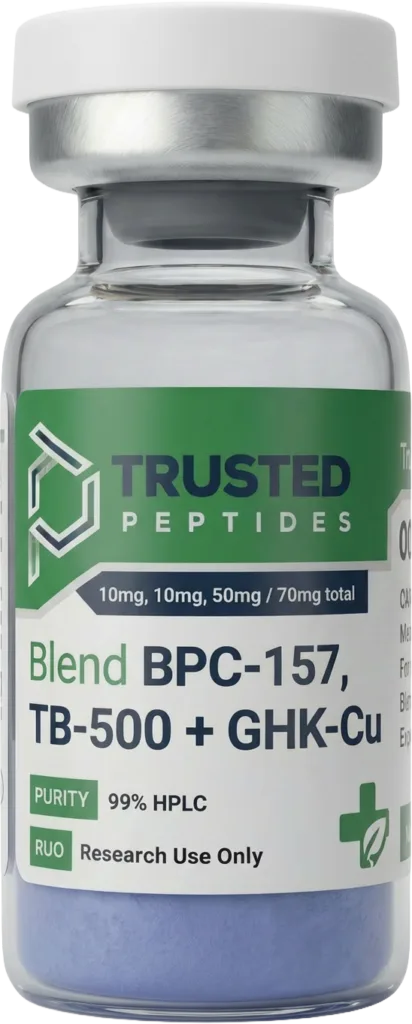
In stock