Trusted peptides for research use only — Not for human or animal consumption

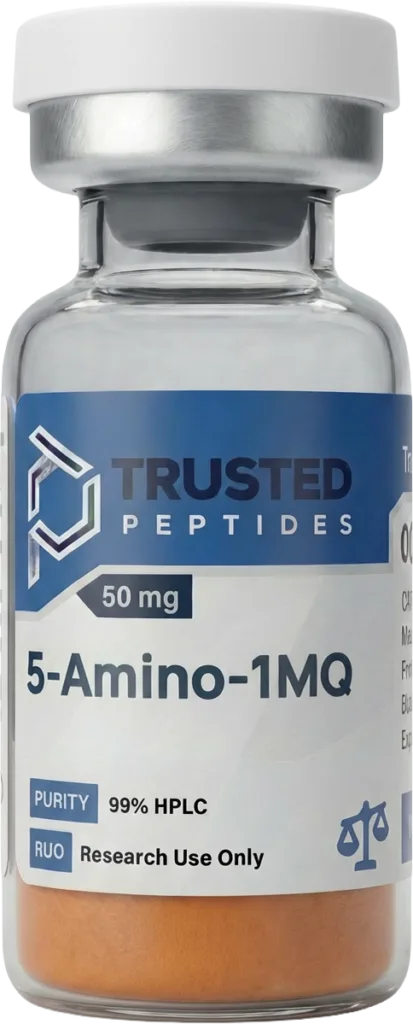
5-Amino-1MQ

A next-generation molecule researched for its ability to block the enzyme NNMT. By inhibiting this enzyme, 5−Amino−1MQ may increase metabolic rate, promote fat loss, and reduce the creation of new fat cells, making it a cutting-edge subject in metabolic research.
Out of stock

Want to be notified when this product is back in stock?

Not For Human or Animal Use

What is 5-Amino-1MQ?

Overview

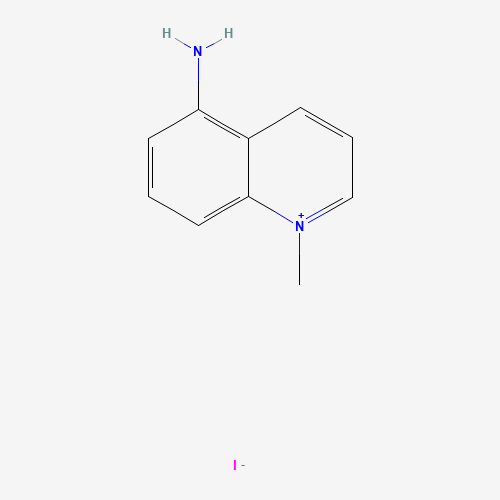
5-Amino-1MQ (commonly written as 5-amino-1-methylquinolinium, often supplied as an iodide salt) is a small-molecule research compound used in laboratory studies as an inhibitor of nicotinamide N-methyltransferase (NNMT). In published research, NNMT is described as an intracellular enzyme that methylates nicotinamide using S-adenosyl-L-methionine (SAM), producing 1-methylnicotinamide (1-MNA) and S-adenosyl-L-homocysteine (SAH).

Studies using 5-Amino-1MQ are limited to cell-based and animal research systems. This page summarizes non-clinical research only and does not suggest therapeutic or medical use.

Biochemical characteristics

  • Class: methylquinolinium small molecule (NNMT inhibitor)
  • Common names: 5-amino-1MQ, 5A-1MQ, 5-amino-1-methylquinolinium
  • Salt / counterion note: many catalogs list the iodide salt (empirical formula commonly shown as C10H11N2·I, MW ~286.11), while some databases list the cation alone (C10H11N2+,  W ~159.21). Always confirm your batch details via the COA.
  • CAS (commonly listed for iodide salt): 42464-96-0
  • Public database reference: PubChem entries list both the cation and salt forms (depending on record type)

Research applications

In the scientific literature, 5-Amino-1MQ is used as a probe compound to explore NNMT-linked pathways and downstream metabolic readouts in controlled models.
Typical research use-cases include:

  • NNMT enzymatic activity and inhibition assays (biochemical and cellular)
  • Nicotinamide / 1-MNA pool modulation in metabolic studies
  • NAD+ and SAM availability as measurable metabolic endpoints in NNMT-focused experiments
  • Epigenetic and methyl-donor balance questions (NNMT as a “methylation sink” in certain model contexts)
  • Energy metabolism and lipid-handling readouts in adipocyte and diet-induced obesity (DIO) mouse models (study-dependent)
  • Aging-related physiology models where NNMT inhibition has been evaluated in older animals (study-dependent)

Pathway and mechanistic context (research framing)

NNMT sits at the intersection of nicotinamide metabolism and methyl-donor economics.
Because NNMT consumes nicotinamide and SAM, published work has explored how altering NNMT activity can affect:

  • NAD+ salvage pathway inputs (via availability of nicotinamide for recycling routes)
  • Methylation potential (through SAM/SAH balance and related downstream effects)
  • Transcriptional and epigenetic readouts in certain cellular systems

Importantly, these mechanistic interpretations are model-specific and should be treated as observations within experimental systems, not clinical conclusions.

Preclinical research summary (non-clinical only)

Multiple peer-reviewed studies have used 5-Amino-1MQ (or closely related NNMT inhibitor probe molecules) to evaluate metabolic endpoints in animals.
For example, published work reports that NNMT inhibition with 5-Amino-1MQ in obese mouse models has been associated with changes in adiposity and body weight over short study windows, alongside shifts in measured intracellular metabolites such as NAD+ and SAM in relevant tissues/cell models.

Separate studies have also investigated NNMT inhibition (including 5A-1MQ) in additional experimental settings, including diet transitions and older-animal physiology, to better understand how NNMT-linked pathways relate to metabolic and functional readouts.

Form and analytical testing

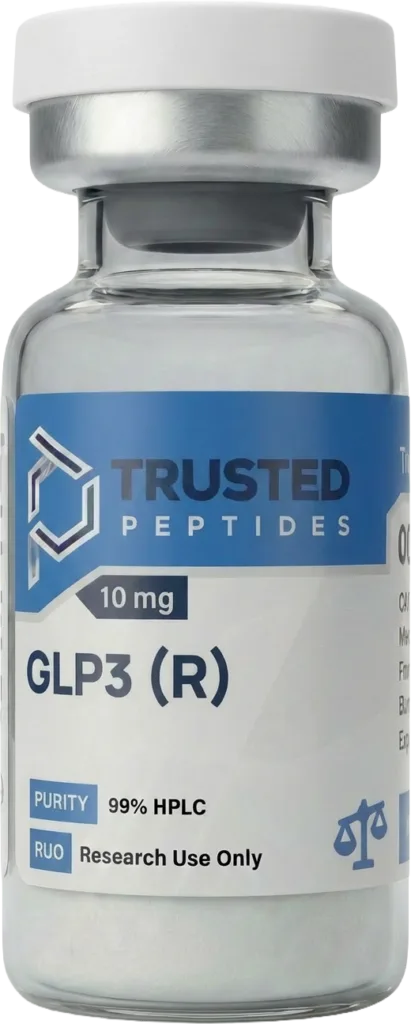
Trusted Peptides supplies 5-Amino-1MQ as a dry powder intended for laboratory handling and controlled research use.
Identity and purity are typically confirmed using standard small-molecule methods such as:

  • HPLC (chromatographic purity)
  • Mass spectrometry (identity confirmation)

For best reproducibility, rely on your batch Certificate of Analysis (COA) for exact salt form, purity, and analytical conditions.

RUO disclaimer

For Research Use Only (RUO). Not for human or veterinary use. Not for diagnostic or therapeutic purposes.
Trusted Peptides research materials are intended exclusively for qualified laboratory research and in-vitro studies.
Selected references

  • Neelakantan H, et al. Selective and membrane-permeable small-molecule inhibitors of nicotinamide N-methyltransferase reverse high-fat diet-induced obesity in mice. PubMed | Full text (PMC)
  • Kraus D, et al. Nicotinamide N-methyltransferase knockdown protects against diet-induced obesity (NNMT inhibition linked to NAD+/SAM and epigenetic readouts in adipose models). PubMed
  • Ulanovskaya OA, et al. NNMT promotes epigenetic remodeling in cancer by creating a metabolic methylation sink. PubMed
  • Pissios P. Nicotinamide N-Methyltransferase: More Than a Vitamin B3 Clearance Enzyme (review). PubMed
  • Dimet-Wiley AL, et al. NNMT inhibition (5A-1MQ) in aged mice and muscle function outcomes. Scientific Reports
  • PubChem compound records (chemical identifiers; salt vs cation records vary): Cation record | Salt/mixture-style record

Molecular Structure

Source: Pubchem
CAS #:
42464-96-0
Formula:
C10H11IN2
Molar Mass:
159.21 g/mol
Form:
Orange lyophilized powder

Laboratory Tests & Certificates

All peptides undergo rigorous testing to ensure pharmaceutical-grade quality for your research. Third-Party Lab Testing Independent laboratory verification and certificates of analysis (COA) are available for download.
Batch
01982028
Prod. February 4, 2026
Exp. August 30, 2028

Compliance verification required.

By continuing I aknowledge that:
  • I am at least 21 years of age
  • Products are for research use only (not for human consumption)
  • I accept the terms and conditions.
Login to shop