Overview
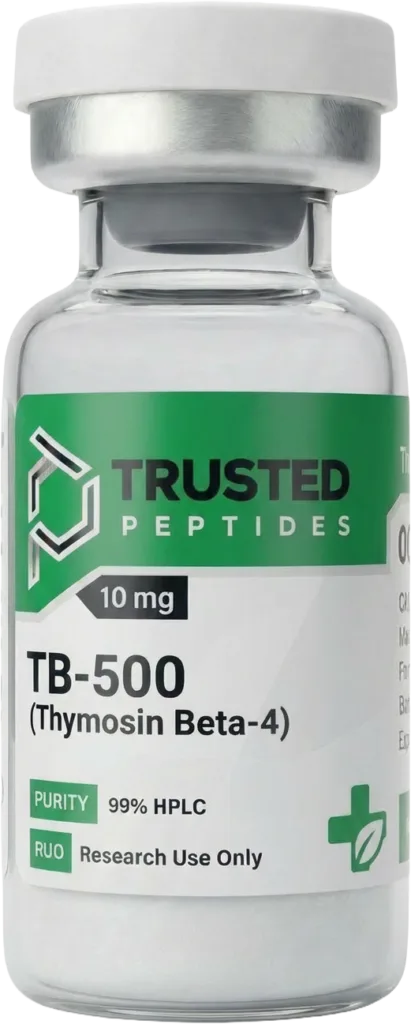
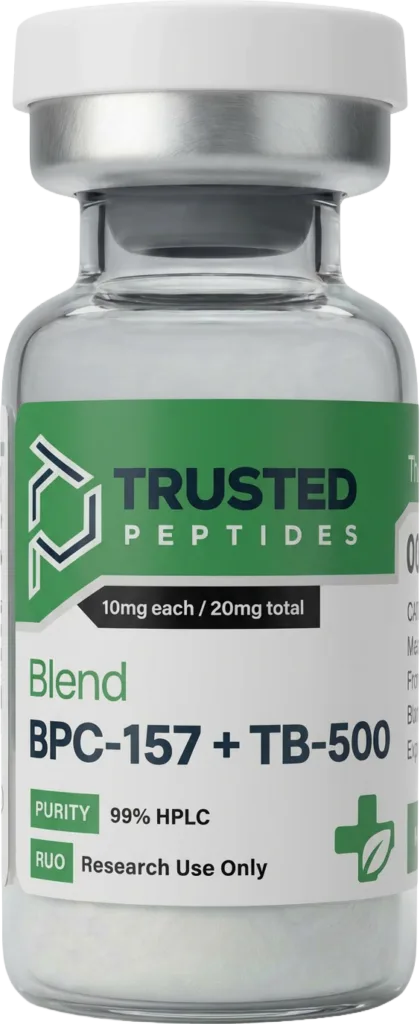
TB-500 is commonly sold in the research reagent market as a synthetic form of thymosin β4 (Tβ4), a small actin-interacting peptide studied for its role in cytoskeletal organization and related cell behaviors. In laboratory settings, thymosin β4 is best known for binding G-actin and influencing the balance between monomeric and filamentous actin, which can affect processes like cell movement and remodeling.
Important note about the name “TB-500”
The label “TB-500” is used inconsistently across the marketplace and databases. Some registries use “TB-500” to refer to a short thymosin β4 fragment (17–23), while other vendors use “TB-500” to mean full-length thymosin β4. For accurate identification, rely on the sequence, CAS, and your batch Certificate of Analysis (COA)—not the nickname alone.
Biochemical characteristics
- Peptide: Thymosin β4 (Tβ4), synthetic (research grade)
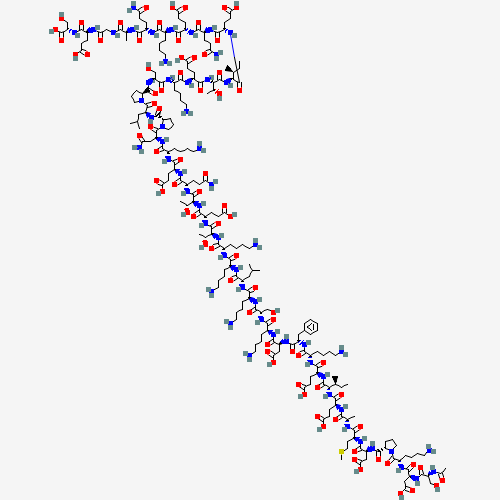
- Length: 43 amino acids
- Sequence (commonly supplied as N-terminally acetylated):
Ac-Ser-Asp-Lys-Pro-Asp-Met-Ala-Glu-Ile-Glu-Lys-Phe-Asp-Lys-Ser-Lys-Leu-Lys-Lys-Thr-Glu-Thr-Gln-Glu-Lys-Asn-Pro-Leu-Pro-Ser-Lys-Glu-Thr-Ile-Glu-Gln-Glu-Lys-Gln-Ala-Gly-Glu-Ser
- Molecular formula: C212H350N56O78S
- Molecular weight: 4963.44 g/mol
- CAS: 77591-33-4
Form: supplied as a lyophilized powder for stability.
What researchers commonly study with thymosin β4 / TB-500
Because actin remodeling sits upstream of many cellular phenotypes, thymosin β4 is frequently used in controlled experiments that measure cytoskeleton-linked outputs such as:
- Actin dynamics: G-actin sequestration, shifts in F-actin organization, stress fiber formation, and polymerization-state readouts
- Cell migration & adhesion: scratch (“wound”) assays, transwell migration, attachment/spreading assays, and focal-adhesion remodeling
- Endothelial biology: migration and tube-formation assays, plus angiogenesis-adjacent signaling endpoints (model-dependent)
- Exploratory pathway studies: cytoskeleton-linked signaling readouts that may overlap with ECM remodeling, stress-response, or inflammation-associated markers (interpretation is assay- and model-specific)
Reconstitution and storage guidance (general lab best practices)
- Allow the vial to reach room temperature before opening to reduce moisture condensation.
- Reconstitute using a sterile, peptide-compatible solvent or buffer appropriate for your assay. If solubility is uncertain, start with a small test volume.
- After reconstitution, aliquot into working volumes and avoid repeated freeze–thaw cycles.
- For storage, keep lyophilized peptide tightly sealed and protected from moisture/light. Long-term storage is typically in a freezer (commonly ≤ −20 °C; colder for extended storage). Store solutions frozen when practical.
Quality documentation
Trusted Peptides provides products intended for laboratory workflows. For identity and traceability, use your batch documentation (e.g., COA) and—when appropriate—standard analytical checks such as chromatographic purity (e.g., HPLC) and mass confirmation (e.g., MS).
Research-use-only statement
For Research Use Only (RUO). Products offered by Trusted Peptides are intended exclusively for in-vitro laboratory research and related experimental use. These materials are not medicines or drugs and are not approved to diagnose, treat, cure, or prevent any disease.
Not for human or veterinary use.
References and further reading
- Xue B. et al. (2014). Structural basis of thymosin-β4/profilin exchange leading to actin filament polymerization. PMC
- De La Cruz E.M. et al. (2000). Modulation of actin dynamics by thymosin-β4 (actin monomer interaction). PubMed
- Malinda K.M. et al. (1997). Thymosin β4 stimulates directional migration of endothelial cells. PubMed
- Hannappel E. (2010). Thymosin β4 and its posttranslational modifications. PubMed
- Registry note on “TB-500” used as a thymosin β4 fragment