Overview
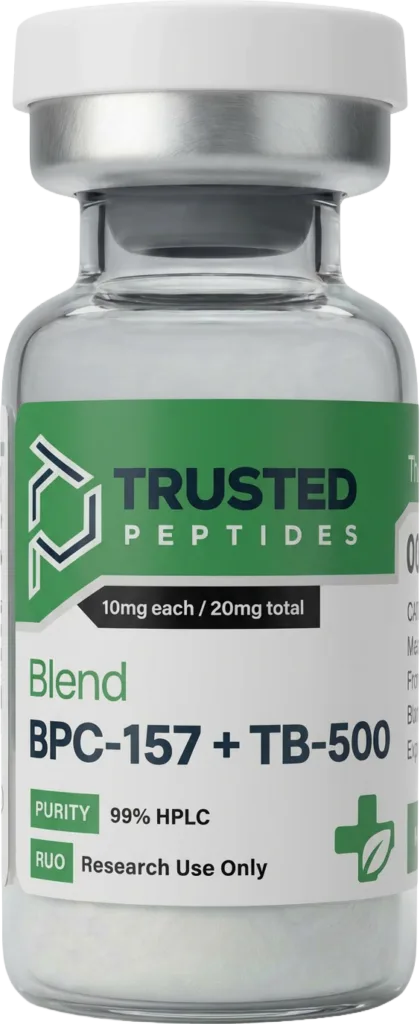
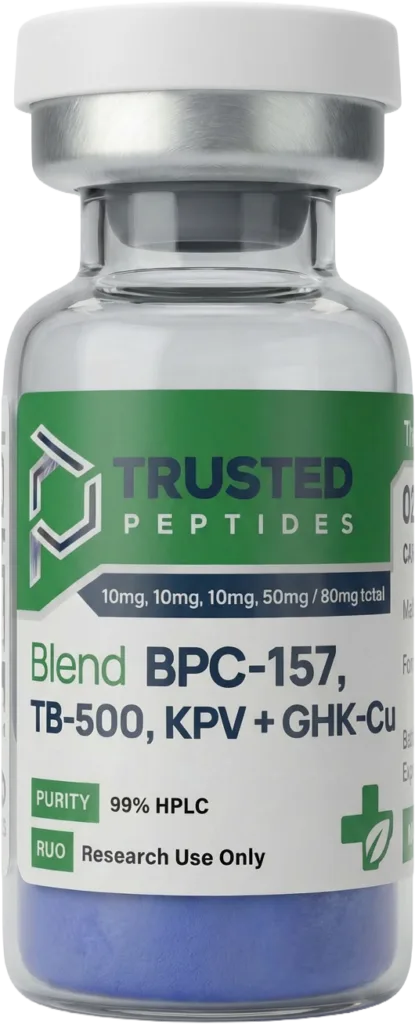
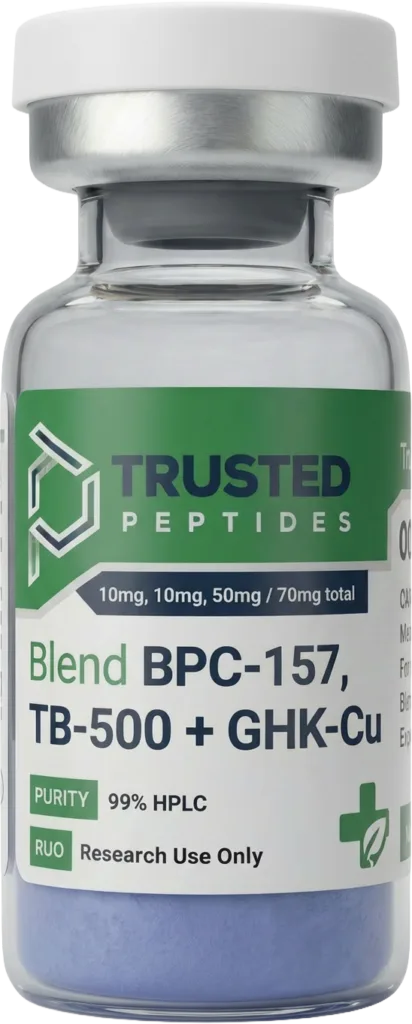
The BPC-157 + TB-500 blend brings together two research peptides that are frequently used in preclinical and in-vitro settings to explore pathways involved in tissue response to injury—especially models looking at cell migration, angiogenic signaling, and matrix/tissue remodeling.
What’s in the blend
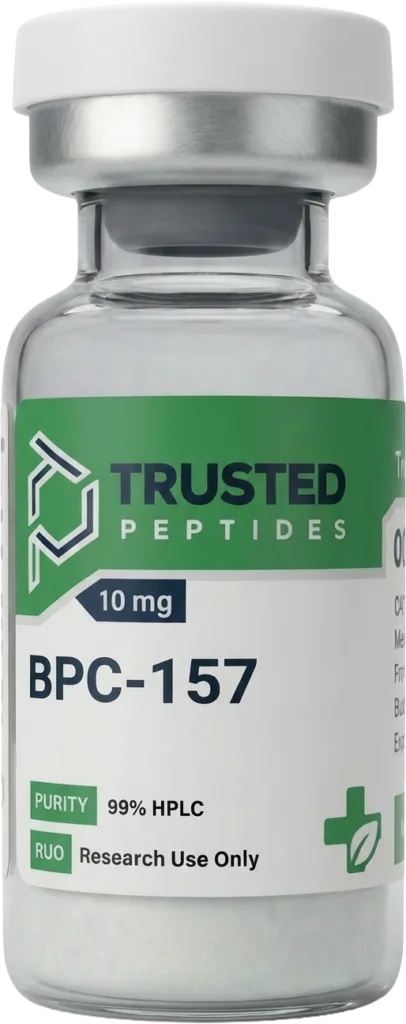
- BPC-157 — A synthetic form of a 15-amino-acid gastric pentadecapeptide that researchers study for its effects on signaling networks associated with endothelial function and repair biology (including nitric-oxide–linked pathways and growth-factor–related signaling readouts).
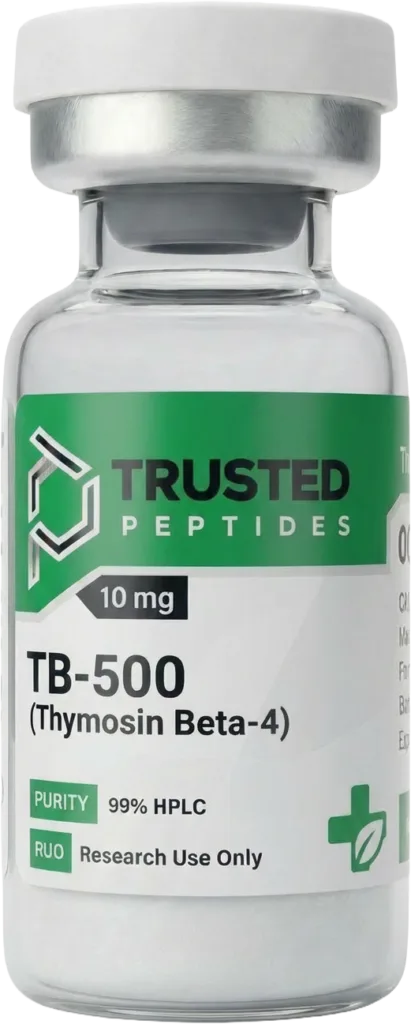
- TB-500 — A thymosin β4–derived research peptide used in studies of actin/cytoskeletal dynamics and cellular motility. In scientific literature, thymosin β4 is a well-known actin-binding peptide; “TB-500” is commonly used as a vendor label and has also been reported (in analytical testing contexts) as a thymosin β4 fragment in some preparations.
Why researchers study the combination
In exploratory research, this pairing is often selected when investigators want to probe multiple, complementary layers of repair biology in the same model:
- Vascular/NO and growth-factor signaling endpoints (often evaluated via endothelial assays and blood-flow/angiogenesis readouts in animal models).
- Cytoskeletal organization and migration endpoints (commonly assessed with actin-related measurements, adhesion/motility assays, and wound-closure style in-vitro setups).
- Remodeling-focused outcomes in controlled preclinical systems where investigators track time-to-closure, structural organization, or histologic markers of repair.
Form
Provided by Trusted Peptides as a lyophilized (powder) material for stability in storage and transport.
Research use notice
For Research Use Only (RUO). Products sold by Trusted Peptides are intended solely for in-vitro laboratory research. They are not medicines or drugs and are not approved to diagnose, prevent, treat, or cure any disease.
Not for human or veterinary use. Not for medical, diagnostic, or therapeutic use.
Selected references
- Sikiric P, et al. “Stable gastric pentadecapeptide BPC 157…” Current Pharmaceutical Design (2018). PubMed
- Hsieh M-J, et al. “Therapeutic potential of pro-angiogenic BPC157…” (VEGFR2/Akt/eNOS signaling). Journal of Molecular Medicine (2017). PubMed
- Hsieh M-J, et al. “Modulatory effects of BPC 157 on vasomotor tone…” (NO-dependent effects). Scientific Reports (2020). Article
- Yarmola E-G, et al. “Thymosin β4: actin regulation and more.” Annals of the New York Academy of Sciences (2007). PubMed
- Smart N, et al. “Thymosin β4 and angiogenesis.” Annals of the New York Academy of Sciences (2007). PubMed
- Malinda K-M, et al. “Thymosin β4 accelerates wound healing.” Journal of Investigative Dermatology (1999). PubMed
- Esposito S, et al. Identification of an N-terminal acetylated thymosin β4 fragment in TB-500 (analytical detection report). Drug Testing and Analysis (2012). PubMed